Wednesday, August 21, 2013

How Many Words Should I Write a Day?


How many words should you write a day? Well, I'll give you the easy answer first. You should write at least 1,000 words a day.
Where did I get that number? I just picked a number that sounded kind of big and typed it out. And the truth is, that's pretty much what everyone does. There is no hard and fast rule as to how many words you should write a day. Frustrating. Isn't it!?
So how many words should you really write a day? As many as is humanly possible.
I have a personal goal of 2,000 words a day, but I don't always succeed. Some days life gets in the way and I don't write a single word.
I try to sit down every day and write as many words (or as many scenes) as I can.
Hemingway's writing desk in Key West
But wait. Are you one of those people who needs a quiet room to write? Or you can't write a word until the house is clean? Or you need a large chunk of time to write?
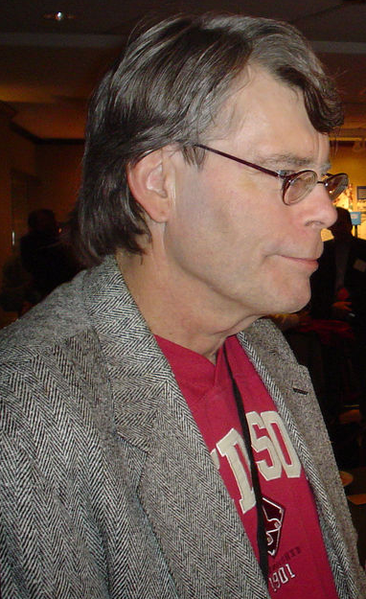
Well, too bad! I'm pretty sure Stephen King wrote in a closet! A freaking closet!! And in my imagination there was a screaming baby or two on the other side of the door. Damn you Joe Hill:)
If the only time you write is when circumstances are ideal you will never finish your book. Take whatever time you can get. Steal it from your husband, and yes, even your kids if you have to, but make writing a priority.
The King
And what if you really don't have the time to sit down and write? Then think about the book. Plot it out in your head. Introduce yourself to the characters. Figure out the ending.
I want you to go to bed thinking about this book and wake up in the middle of the night with it on your mind.
It should take up so much space in your head that you can't NOT write the thing.
Don't waste your time day dreaming about how much money you'll make or what people will think when you get published. Don't Google the amount of a book advance and don't pretend you're doing an interview with Oprah Winfrey about how you got your amazing book idea.
Just think about your plot and how you can put it into a novel. Bring your computer along with you and carve out the time to actually write. Sign up for NaNo or give yourself a deadline for the first draft and then eat, drink, sleep, and write your novel into existence.
And if that is too much to handle then just write 1,000 words a day, but remember, 1,000 words a day is for sissies. Stephen King is not a sissy. If you want to get published I'm pretty sure you shouldn't be either.


Friday, August 9, 2013

Claiming My Blog


I'm not even sure why I'm doing this, but I'm claiming my blog for bloglovin.

Five points for anyone who can tell me WHY I'm doing this, because I don't really get it.
And if this is something that people were doing like ten years ago and I'm just an idiot for doing in now...keep it to yourselves:)


 <a href="http://www.bloglovin.com/blog/10105049/?claim=evwpdnsjzqh">Follow my blog with Bloglovin</a>

Editing Your First Draft

I used to hate editing. I'd write out the novel and it would be so bad that I was sure there was no saving it. The changes that needed to be made were so great, and sometimes I wasn't even sure exactly what those changes needed to be.
But now I've worked it all into a five step process that can save almost any first draft.
Before you start I want to warn you that this isn't for the faint of heart. It's probably going to be more work than you want to do...don't say I didn't warn you!

Step One
I've heard that writing a first draft is like building a house of cards, but my first draft always looks more like a game of 52 card pick up. It's a complete mess. So the first step in this process is a very long one.
Clean up the mess. Make the plot coherent, make the timeline precise, keep those character's names and physical descriptions the same throughout the novel, tell the story, tell all of it. Work on it until everything is perfect. It should be the best that mere mortals can do.
Yes, that's just step one. Now proceed to step two.

Step Two
Buy or rent Writing the Breakout Novel Workbook by Donald Maass. But here's the hard part, you actually have to do the exercises and use them to make your book better.
I'll fess up here and tell you that I have not done ALL of the exercises in this book. I know, I'm so ashamed. When he wants me to "find six more inner turning points" I usually do about half that. So I'll forgive you if you don't do it all, but the more work you put into the exercises the better your book's going to be.
Once this is done you may proceed to step three.


Step Three
If you've read my blog before you've heard me mention Margie Lawson's EDIT's system. Check out her website and buy the notes (or take the class). www.margielawson.com
She's going to ask you to highlight your entire novel in a plethora of fun colors. Yes, your entire novel. This class really helps you take the pulse of your writing, so to speak. It can illuminate the weak points in your book, things that you can't see anymore because you've looked at it about a million times. Highlight that book of yours and then fix the problems that you've uncovered.
Once this is done you may proceed to step four.

Step Four
This is probably the step you're most familiar with (besides step one of course). You're going to give your book out to a few readers who will help you edit. Now don't give your YA book to your great Aunt Ida who doesn't know what Facebook is. Give it to readers who are actually reading your genre. And give it to them with specific instructions. Sure, let them help you out with grammar and description, but ask them specific questions too.  Are they bored at any time during the book? And if they are, where? Why? Do they actually WANT to read your book after reading the first chapter? Do they care what happens to your protagonist? Ask them what they like about the book and what they want to see more of.
Don't you dare just let them tell you it was great and move on! I mean it! There is always room for improvement!
Once this is done you may proceed to step five...almost done.

Step Five
I'm going to have to admit to you here that I'm not a very good writer. (This may already be obvious from my blog posts.) I slam my fingers onto the keys just to get the ideas on paper, just to write out the story. There's no time in my mind for pretty words. You may be different. If your words are already beautiful you might be able to skip this step, but I recommend that you don't.
If you haven't already read Writing Tools 50 Essential Strategies for Every Writer by Roy Peter Clark then do that now and use what you learn. Otherwise, just go through your book with an eye out for making the words better.  Make sure you have chosen every word in that book for a specific reason.
Next, make sure that your book has at least five beautiful, magical, wonderful sentences. I mean the kind that you've read in a book before that you had to stop and reread. The ones that you savor, the ones that make you feel something that lasts. Now this step is not as easy as it sounds. These Shakespearesque sentences don't just fall from the sky. You'll need to ruminate on them for a while, but once you've added them... You're done!

Now that wasn't so hard, was it? Don't worry, you won't always have to do this much work, but try it on your current manuscript.  Your novel will be better for it.
I'll keep you posted as I go through these steps myself. Yes. I really do all this work! I'm only 50,162 words into my disaster of a first draft, but when I get to the editing you're going to hear about it.
Good luck and happy writing.
EL


Thursday, August 1, 2013

Ten Things I've Learned From NaNoWriMo


1.  50,000 words does not a novel make.
2.  If you feel like you're neglecting your kids, take them to GattiTown and give them $40.00. They will forgive you.
3.  GattiTown is not a good place to sit and write a novel.
4.  GattiTown should not give away giant blow up bats as prizes.
5.  If you are rereading your manuscript and you see any version of the words,"You are mildly intoxicated, possibly completely inebriated at this point, HA HA HA." Get ready for some serious deleting.
6.  Writing everyday is the easy part. Working it all into an exciting plot is the hard part.
7.  If taken before sitting down to write, a giant bowl of butter noodles plus one beer acts as a pharmaceutical grade anesthetic.
8. Your first draft will kind of suck no matter how fast or slow you write the thing.
9. Your dogs WILL eat your manuscript. Or at least as much of it as they can get away with.
10. Writing consistently for 31 days will give you a momentum that you won't want to stop.


Thursday, July 25, 2013

Will My Book Get Published?


I can't tell you how many times in the last five years I have written these exact words into Google's search line.
Will my book get published? As if Google knew anything about the books I'd been working on.
But still, every now and again, I type in those words just to see if I get the answer I am looking for. What I want to hear is, "Yes. After all your hard work your book WILL get published."
Well here it is. If you're asking the same question, "Will my book get published?" The answer is yes.
Really! Yes.
How can I be so sure? Two words: Self Publishing.
I know, you're shaking your head at the computer screen as if self publishing were something shameful. Something far beneath you. You're looking for a "real" publisher.
Well, let me tell you something. I know writers with contracts with so called "real" publishers and they are self publishing their next books.
Why? There are different reasons for different writers. Sometimes the genre doesn't quite fit the publisher that picked up the book.  Or the writer feels the publisher has set the price of the book too high. Or maybe the writer just doesn't want to share their profits with a publisher.
Add to that the fact that most writers, no matter who publishes them, do a lot of their own marketing. The writers feel like they're in control of the marketing anyway so why not get the full profit?
I'm not saying which one is the better way to go. I'm still going to go through the painful querying process after I finish my next book, but isn't it liberating to know that one way or another you can get your book published?
And if you do end up self publishing, what's the worst that could happen? You pay for an editor, pay for the book cover, and maybe spend some money on marketing and then your book doesn't sell?
So you're out a couple bucks in the name of securing your future. Hell, I still owe money on my completely useless Bachelor of Science in Animal Science. I'm at home looking after two kids, not two farm animals. Why'd I spend all that money? Because my Dad said I had to spend money to make money.
And what's the best case scenario? Your book catches on, Oprah's calling, but you can't get to the phone because you are wading through piles and piles of cash. (Daydreaming is fun.)
Here's what I think will happen.
Armed with the knowledge that you will get your book published you'll really start working on it. The thought of friends and family reading this book with scare the crap out of you and you'll crank out a book that is the absolute best you can do. You'll publish it and maybe get a little bit of money, but you will have learned a ton.
You'll use that knowledge to write your next book. A better book! And so on and so forth.
You might not get that best seller, but you'll be closer than you were back in the days when you couldn't bring yourself to waste time writing without the certain knowledge that you'd get published.
So here it is. I'm giving it to you. If you write it. It will get published.
Whew, what a relief! Now you can go back to Google and start typing things like, "How can I lose ten pounds in three days?" Or maybe that's just me?

Thursday, July 18, 2013

NaNoWriMo Wordcount Update


As you may know I'm signed up for Camp NaNoWriMo which means I am trying to write 50,000 words this month. I thought you might be interested in how I'm doing so far.
The truth is, it's not looking so good!
Yesterday morning I was at 21,900 words, not too shabby.  I should have been at 27,421 words, but I was close enough.
Then something terrible happened. I got confused. (It happens more than I'd like to admit.) The time line was giving me trouble. The character descriptions were changing. First one character had long hair and then she had short hair.  It was maddening.
Now these are all things that can be fixed in editing, but because I'm kind of OCD about things, I couldn't let them go.
I printed out my entire "novel" (MISTAKE) and read all 21,900 words. I won't waste your time here explaining how terrible I thought the entire thing was. If you write, you know what I'm talking about. I did resist the urge to delete the entire thing and managed to do away with exactly 3,467 miserable words.
I've been doing the math since yesterday. Different equations that all have to add up to 50,000 by July 31st. I could write 2,255 words everyday for the next 14 days, but weekends can be so hectic. Maybe I should write 3,158 words for the ten weekdays that I have left? Save the weekends for fun stuff like BBQ's and beers.
Either way it's a heck of a lot of writing, especially considering that I still haven't worked out all the details of my plot.
Like I said, it's not going well.
I guess I'd better stop procrastinating and get to work.
Only 31,576 more words to go and only 14 days to do it. Now if only I could find a way to get the kids into a camp next week! Hmmm.....

Saturday, July 13, 2013

Forget Everything you Know about Writing


I know, I know, I just told you to educate yourself about how to write a good book. Don't hate me before you've read what I have to say.
First of all, if you've read books about how to write your head is probably filled with a lot of fantastic information. Wonderful.
The problem here, for some of us, is that all of that information can be overwhelming.
It can be damn near terrifying to think of all the things that need to go into your book. Where do you even begin?

Well, if the books you read were similar to the ones I read they told you to start with an outline.
You get the basic idea for your novel and then shove that into a framework, aka, your plot. To do this you'll need to figure out the inciting incident, the midpoint mirror, the call to action, antagonist's motivation, back story and the list goes on and on. (And if you don't know what I'm talking about here, I'll post more about that later)
 So, I did as I was told. Or at least tried to do it.  Months went by and no matter how I approached it,  I couldn't plot out the entire story. And worst of all, I hadn't written a single word! I didn't have a plot. I didn't have an outline. And I wasn't getting any closer to having a novel.
Then I forgot what I'd read in all of those books and just started writing. Yay! Freedom. Back to doing what I wanted to do in the first place.
I didn't think about the protagonist's journey, or the introduction to normal, I just wrote.
Now I'm 8,000 words in and I still do not completely understand why my antagonist is being so mean to my protagonist. Gasp!! Are you horrified?
The truth is, I wish I could have plotted it all out into a neat little stack of note cards. It would certainly have made it easier to write and, oh SO much less work in the editing process.
But my brain just doesn't work like that. I had to write about the characters to get to know them. And how could I possible know what they were going to do in the story until I knew them a little better.
The bottom line is that eventually you're just going to have to put the bit in your mouth and pull the cart up the hill. Yes, in this analogy you are the horse and your book is the cart.
Will you still have to take the time to plot out your novel? Yes. Will all those fancy things you learned in the books have to be put into your novel? Yes.
Is it going to be a lot of work? Yes. But the important thing is to write it. Just put those words on the page and you can work on the details later.
But don't stop reading those how to books! You'll definitely want to have all that information for your vast amount of rewriting:)